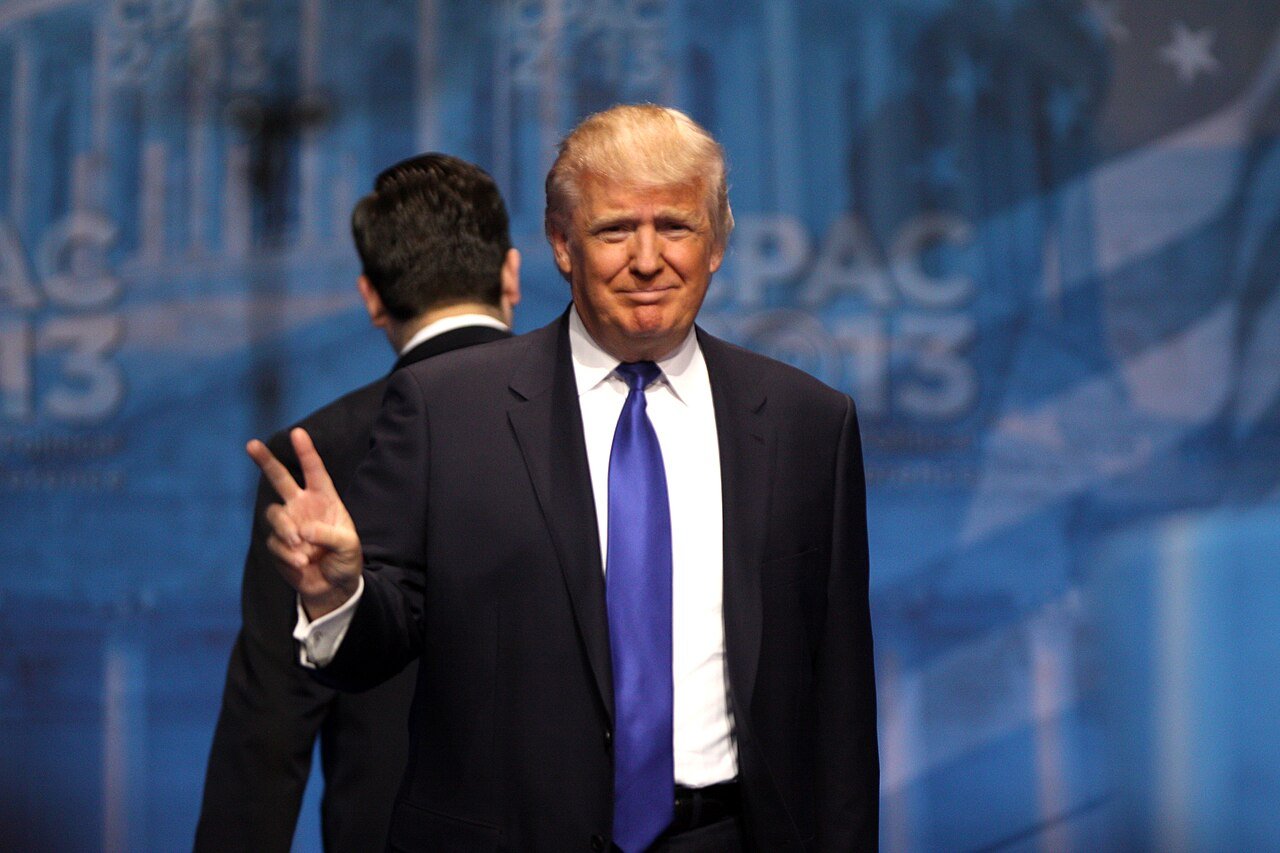
A newly released survey conducted by J.L. Partners has sparked significant political discussion by suggesting that Republican voters remain overwhelmingly aligned with President Donald Trump’s decision to pursue military action against Iran. At a time when media narratives have highlighted supposed fractures within conservative circles particularly involving influential commentators such as Tucker Carlson and Megyn Kelly the poll presents a very different picture: one of strong intra-party cohesion and continued dominance of Trump’s influence over the Republican base.
However, beyond the headline figures lies a more nuanced story about political loyalty, media influence, polling methodology, and the broader implications for U.S. politics heading into upcoming elections.
The Headline Findings: Strong Support for Trump’s Iran Policy
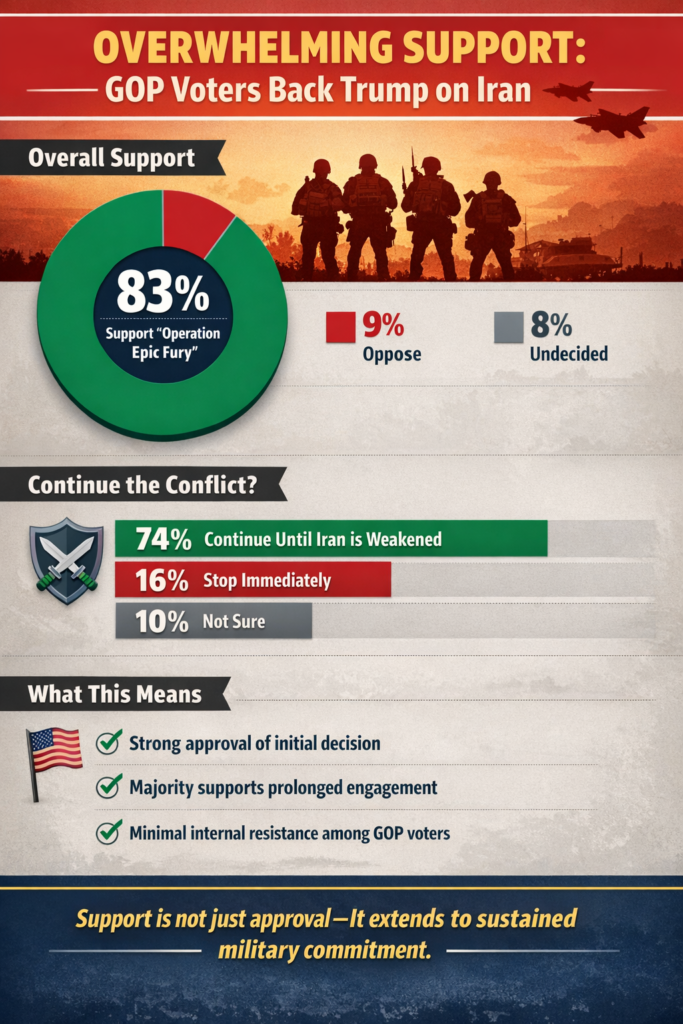
According to the J.L. Partners survey, an overwhelming 83% of likely Republican voters expressed support either “strong” or “somewhat strong” for what is described as “Operation Epic Fury,” a U.S. military campaign targeting Iran. Only 9% indicated opposition, suggesting a highly consolidated base behind Trump’s decision.
Even more striking is the level of commitment to continuing the conflict. Nearly three-quarters (74%) of respondents said the United States should persist in its military efforts until Iran’s military capabilities are significantly degraded or destroyed. By contrast, just 16% favored an immediate halt to the war.
These figures suggest that, at least among Republican voters surveyed, there is not only approval of the decision to go to war, but also a willingness to sustain a prolonged military engagement.
Trump vs Conservative Media Figures
One of the most politically significant aspects of the poll is its comparison between Trump and prominent conservative media personalities who have voiced skepticism or criticism of the Iran war namely Tucker Carlson and Megyn Kelly.


The results indicate a stark imbalance:
- 83% of respondents said they trust Trump’s judgment more
- Only 6% placed greater trust in Carlson or Kelly
- 84% agreed with Trump’s foreign policy views over those of the commentators
- 85% said they take Trump more seriously on world affairs
These findings reinforce a broader trend that has been developing over the past decade: the transformation of the Republican Party into a personality driven movement centered heavily around Trump himself.
Where conservative media once played a powerful role in shaping Republican opinion, this poll suggests that their influence may now be secondary at least when it comes to issues where Trump has taken a clear and forceful stance.
The Illusion of Division?
In recent weeks, several media outlets have suggested that the Republican Party is experiencing internal divisions over the Iran conflict. Critics within conservative circles, particularly those aligned with a more non-interventionist or “America First” foreign policy, have argued that military escalation contradicts earlier promises to avoid foreign entanglements.
However, the J.L. Partners poll challenges this narrative directly. Rather than showing fragmentation, the data indicates that Republican voters are largely unified behind Trump even when influential voices within their own ideological sphere disagree.
This raises an important question: are the perceived divisions within the Republican Party overstated?
It is possible that elite-level disagreements among commentators, analysts, and political figures are not translating into meaningful divisions at the voter level. In other words, while debates may exist among opinion leaders, the rank-and-file Republican voter base appears to remain firmly aligned with Trump.
Electoral Implications: Loyalty as a Voting Driver
The poll also explored how Trump’s Iran policy could influence voter behavior in upcoming congressional elections. The results suggest that alignment with Trump’s position may be a decisive factor:
- 78% of respondents said they are more likely to support a candidate who backs Trump’s military action
- Only 10% said they would prefer a candidate who opposes it
- 55% indicated they would be less likely to support a candidate aligned with Carlson or Kelly’s views
- Just 19% said they would be more likely to support such a candidate
These numbers highlight the continued centrality of Trump in shaping Republican electoral dynamics. Candidates who align themselves closely with his positions—especially on high-profile issues like foreign policy—may gain a significant advantage among primary voters.
Conversely, those who break from Trump, even if they are well-known conservative figures, risk alienating a substantial portion of the party base.
Understanding J.L. Partners: Who Conducted the Poll?
To properly evaluate the significance of these findings, it is important to examine the polling organization itself.
J.L. Partners is a research and polling firm known for conducting political and public opinion surveys, often for media outlets or private clients. The firm uses a mix of methodologies, including online panels, SMS outreach, and phone surveys, aiming to capture a representative sample of targeted populations.
In this case, the poll surveyed 1,018 likely Republican voters over a two-day period (March 17–18), with a reported margin of error of ±3.1 percentage points.
This sample size is standard for political polling and generally considered statistically reliable.
The Role of Leadership and Political Identity
One of the most important insights from the poll is the extent to which Republican voters appear to prioritize leadership identity over policy debate.
Despite criticism from prominent conservative figures, the overwhelming majority of respondents sided with Trump. This suggests that political identity particularly alignment with a central figure may play a stronger role than ideological consistency.
This phenomenon is not unique to the Republican Party, but it is especially pronounced in this context. Trump’s ability to maintain high levels of trust among his supporters, even in the face of intra-party criticism, underscores his continued influence.
Foreign Policy and the Republican Base
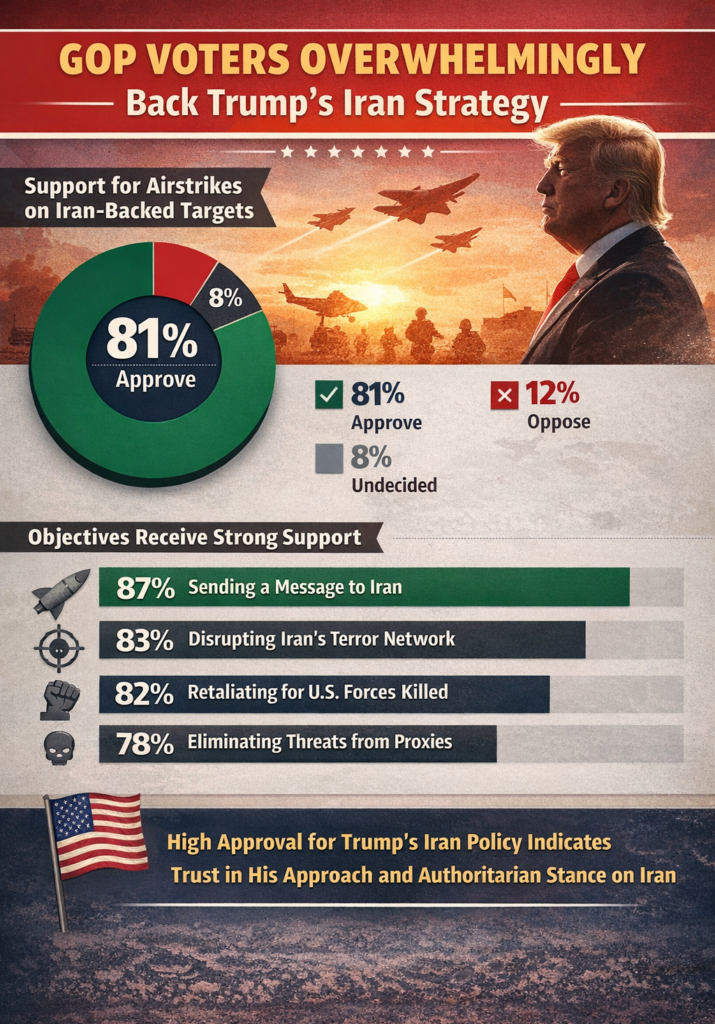
Historically, Republican voters have been associated with a more hawkish foreign policy stance, particularly during the post 9/11 era. However, in recent years, there has been a noticeable shift toward skepticism of foreign interventions.
The strong support for military action against Iran seen in this poll suggests that this shift may not be as deep or widespread as some analysts have suggested or that Trump’s endorsement of the policy has overridden prior reservations.
This raises an important question: is the Republican base truly changing its views on foreign policy, or is it adapting its views to align with Trump’s positions?
Conclusion: Unity, Influence, and the Road Ahead
The J.L. Partners poll paints a picture of a Republican Party that remains firmly unified behind Donald Trump, even on contentious issues like military action against Iran. It challenges narratives of internal division and highlights the continued dominance of Trump’s influence over the party base.
At the same time, the findings raise deeper questions about the nature of political loyalty, the role of media voices within ideological movements, and the evolving dynamics of foreign policy within the Republican Party.
As the United States moves closer to another election cycle, these dynamics will likely play a crucial role in shaping candidate strategies, voter behavior, and the broader political landscape.
Whether this unity persists or begins to fracture under pressure remains to be seen. But for now, at least according to the latest polls, Trump’s hold on the Republican electorate appears as strong as ever.
Leave a Reply