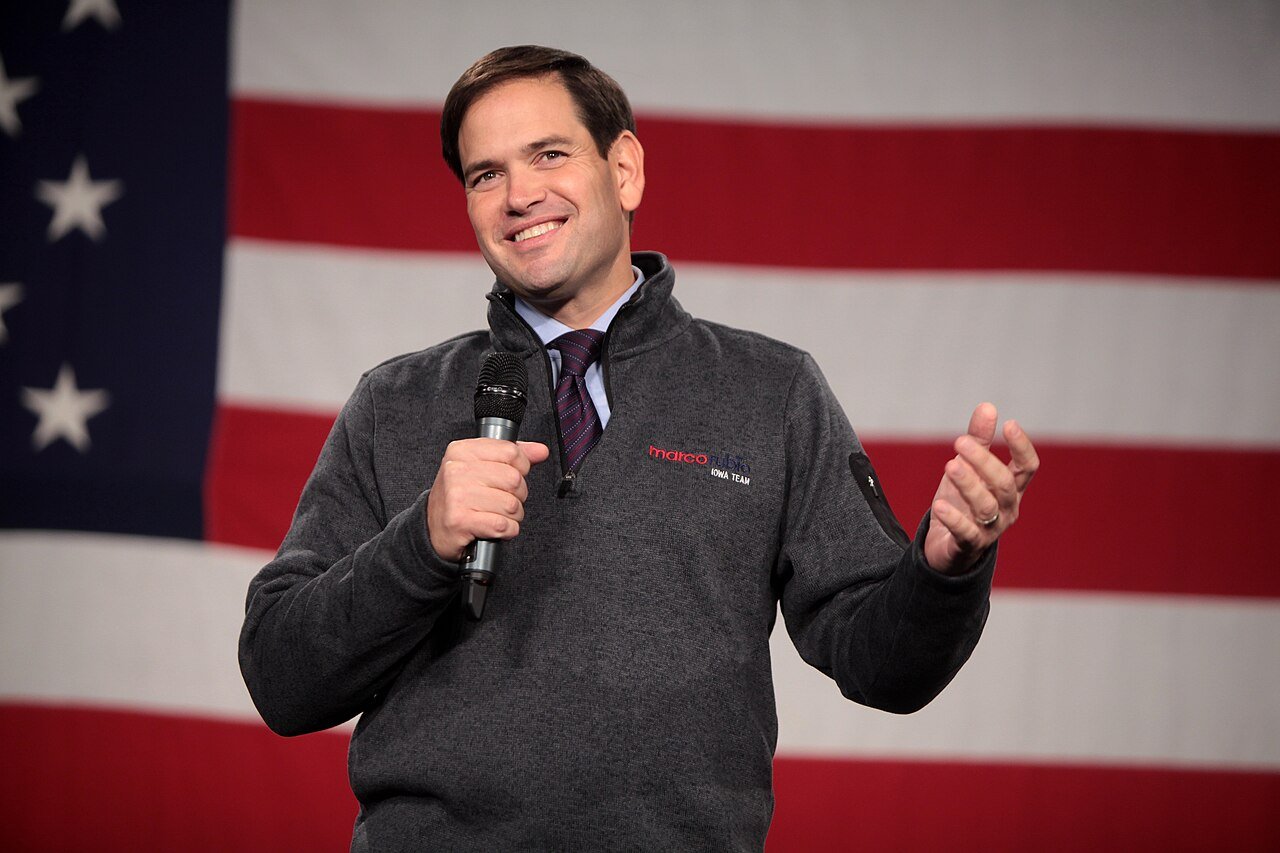
U.S. Senator Marco Rubio is meeting with top diplomats in France today as part of a high-level gathering focused on the escalating crisis in the Middle East. The talks come at a critical moment, as global leaders grapple with the consequences of regional instability, including disruptions to maritime trade and concerns over Iran’s military activities.
The meeting, which includes representatives from major Western allies, is expected to center on efforts to de-escalate tensions, prevent further military conflict, and restore the flow of commercial shipping through key waterways such as the Strait of Hormuz. The strait is one of the world’s most important oil transit routes, and recent instability has raised fears of economic ripple effects far beyond the region.
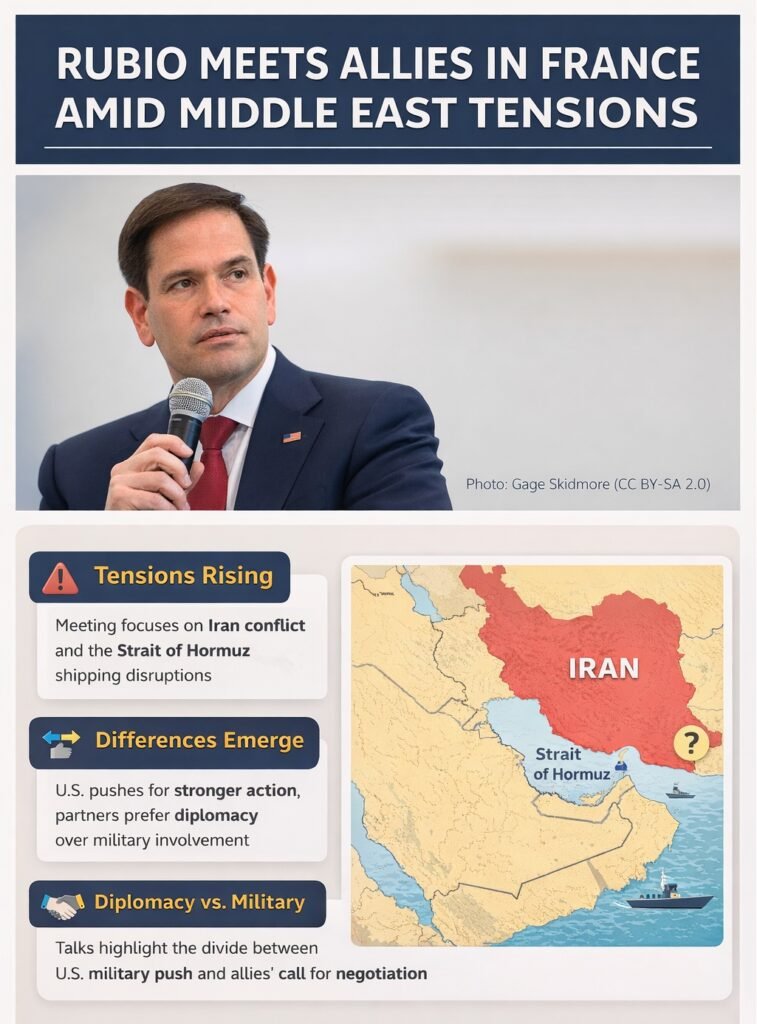
A key issue underlying the discussions is the differing approach among U.S. allies. While Washington has taken a more assertive stance, including military positioning aimed at deterring further escalation, several partner nations have been more cautious. Many have refrained from deploying naval forces to the region, instead emphasizing diplomacy and multilateral negotiations.
This divergence has created a degree of friction within the alliance. U.S. officials have expressed frustration that some allies are not contributing more directly to maritime security efforts. At the same time, European leaders have voiced concerns that increased military involvement could further inflame tensions and lead to a broader conflict.
Despite these disagreements, the meeting in France reflects a shared recognition of the stakes involved. Leaders are expected to explore coordinated strategies that balance security needs with diplomatic solutions. These may include renewed negotiations over Iran’s nuclear and ballistic missile programs, as well as mechanisms to ensure safe passage for commercial vessels.
The talks also highlight the broader challenge of maintaining unity among Western allies during times of crisis. While differences in strategy are not uncommon, the current situation underscores how quickly such gaps can become politically sensitive. Public messaging around the meeting has, in some cases, amplified these tensions, with certain portrayals suggesting a sharper divide than may exist in practice.
In reality, analysts note that the participating countries remain aligned on many core objectives: preventing a wider war, safeguarding global trade, and limiting the spread of advanced weapons capabilities. The debate lies primarily in how best to achieve those goals.
As the discussions unfold, observers will be watching closely for signs of consensus or concrete policy steps. Any agreement on joint actions—whether diplomatic initiatives, economic measures, or limited security coordination—could play a significant role in shaping the next phase of the crisis.
Ultimately, the meeting serves as a test of alliance cohesion in a complex geopolitical environment. While disagreements are evident, the ability of these nations to coordinate their responses may prove crucial in determining whether the situation stabilizes or escalates further.
Leave a Reply