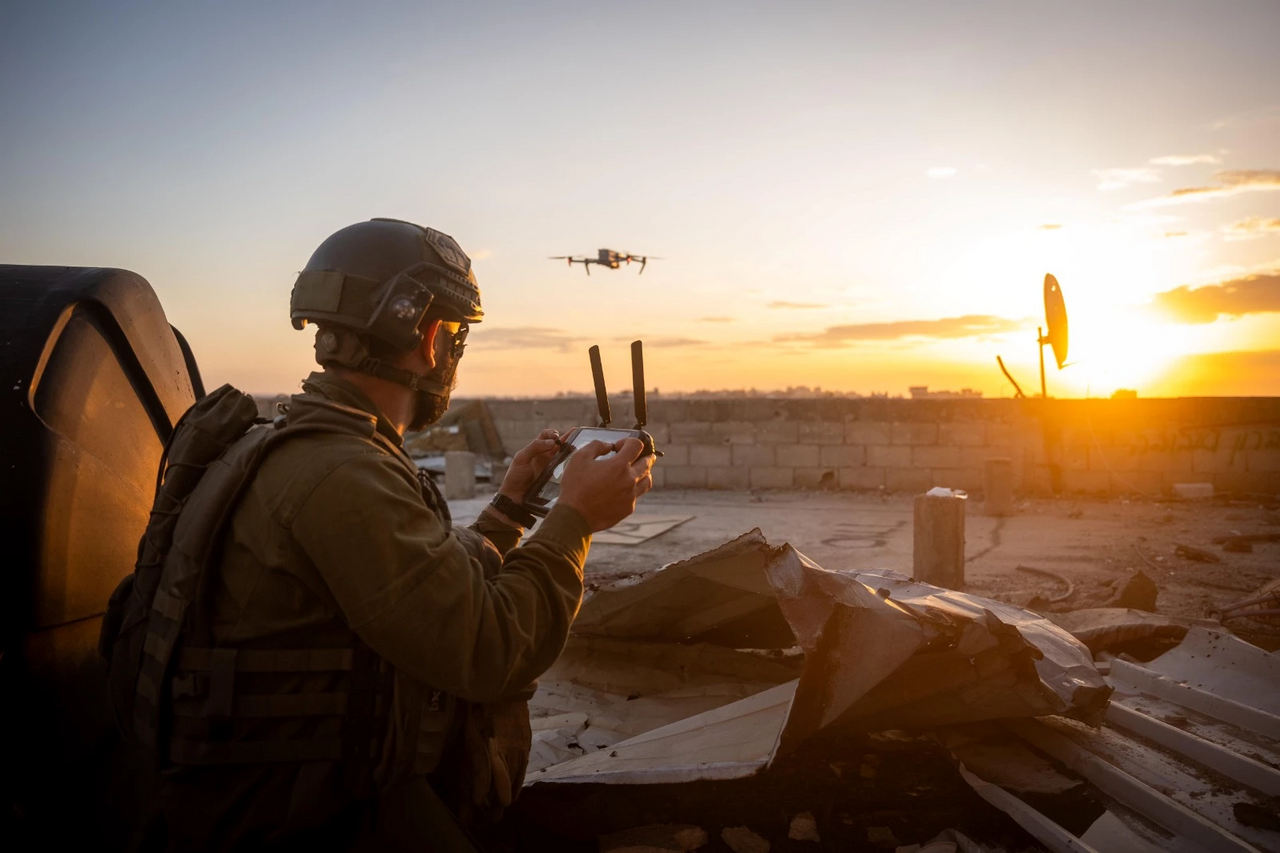
Tensions in the Middle East continue to escalate as Israel maintains a sustained campaign of airstrikes across southern Lebanon, targeting positions linked to the militant group Hezbollah. The latest developments mark a dangerous phase in an already volatile regional conflict, with both sides showing little willingness to de-escalate.
Escalation of Military Operations
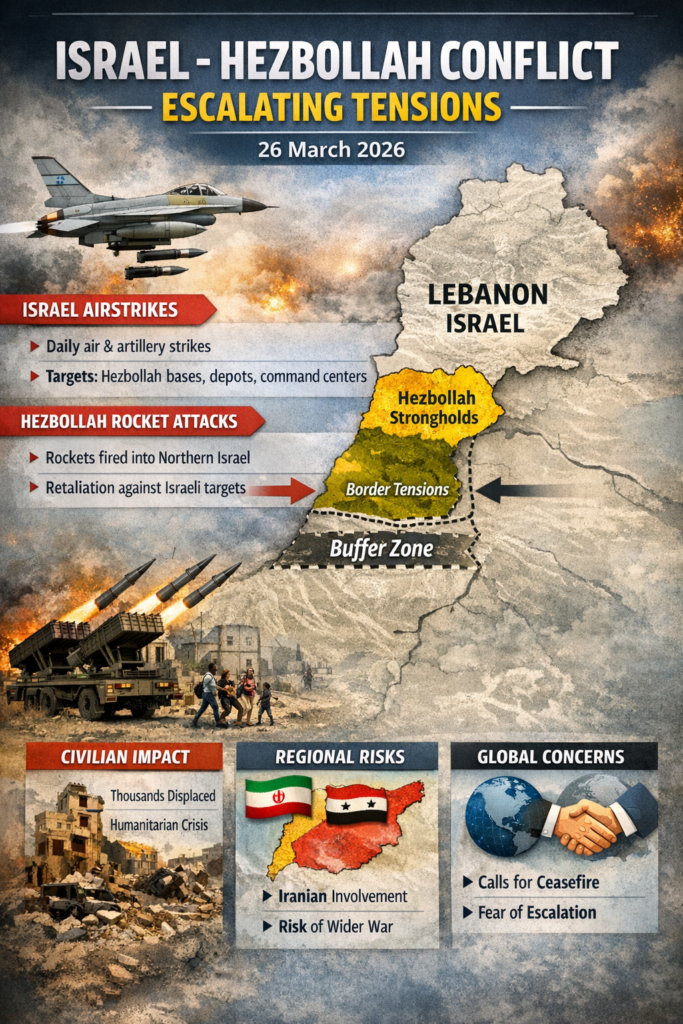
Over the past several weeks, Israeli forces have carried out near-daily air and artillery strikes on suspected Hezbollah strongholds in southern Lebanon. These operations are part of what Israeli officials describe as a broader strategy to neutralize threats along its northern border.
The escalation follows a series of rocket attacks launched by Hezbollah into northern Israel earlier this month. In response, Israel significantly expanded its military operations, targeting infrastructure, weapons depots, and command centers believed to be used by the group.
Israeli leadership has emphasized that the strikes are necessary to ensure the safety of its citizens, particularly in border communities that have faced repeated rocket fire. Military officials have also indicated that operations could intensify further if attacks from Hezbollah persist.
Hezbollah’s Continued Resistance
Despite the sustained Israeli offensive, Hezbollah has shown no signs of backing down. The group has continued to launch rockets and projectiles into Israeli territory, signaling its intent to resist Israeli military pressure.
Hezbollah leaders have framed their actions as a defense of Lebanese sovereignty, warning that any further escalation by Israel would be met with a stronger response. The group’s defiance has raised fears of a prolonged and potentially wider conflict, especially given its regional alliances.
The ongoing exchanges highlight the deeply entrenched nature of the conflict, with both sides unwilling to concede ground. Analysts warn that such dynamics significantly increase the risk of miscalculation, which could trigger a broader war.
Civilian Impact and Humanitarian Concerns
As the conflict intensifies, civilians in southern Lebanon are bearing the brunt of the violence. Airstrikes have damaged homes, infrastructure, and essential services, forcing thousands of residents to flee their communities.
Humanitarian organizations have raised alarms about the growing crisis, citing shortages of medical supplies, electricity, and clean water in affected areas. Emergency responders have also come under strain as they attempt to manage the increasing number of casualties.
In Israel, residents of northern towns have similarly faced disruption, with sirens and rocket alerts becoming a regular occurrence. Many families have sought shelter or temporarily relocated to safer areas, underscoring the cross-border impact of the conflict.
Strategic Objectives and Regional Implications
Israel’s current strategy appears to include the creation of a “buffer zone” inside southern Lebanon, aimed at pushing Hezbollah forces further away from its border. While such a move may provide short-term security benefits, it also carries significant risks.
Historically, similar strategies have led to prolonged military entanglements, raising concerns about the potential for a drawn-out conflict. The situation is further complicated by the involvement of regional actors, particularly Iran, which is widely regarded as a key supporter of Hezbollah.
The broader geopolitical context adds another layer of complexity. The ongoing tensions are closely linked to the wider confrontation between Israel and Iran, with Lebanon emerging as a critical front in this regional rivalry.
International Reactions
The international community has expressed growing concern over the escalating violence. Calls for restraint and de-escalation have come from multiple governments and global organizations, urging both sides to avoid actions that could further inflame the situation.
Diplomatic efforts are underway to broker a ceasefire, but progress has been limited. The deep mistrust between the parties and the rapidly evolving situation on the ground have made negotiations particularly challenging.
Meanwhile, global markets and political observers are closely monitoring developments, given the potential implications for regional stability and international security.
Risk of a Wider Conflict
One of the most pressing concerns is the possibility that the conflict could expand beyond the Israel-Lebanon border. With Hezbollah’s regional connections and Israel’s broader security concerns, there is a real risk that other actors could become involved.
Such a scenario would significantly escalate the conflict, potentially drawing in multiple countries and leading to a wider regional war. The situation remains highly fluid, with developments unfolding rapidly.
Military analysts warn that even a single miscalculation—such as a strike causing mass civilian casualties or targeting a high-profile figure—could dramatically alter the trajectory of the conflict.
A Prolonged Crisis Ahead
As of 26 March 2026, there are no clear signs of de-escalation. Both Israel and Hezbollah appear committed to their respective strategies, despite the mounting human and economic costs.
For civilians caught in the crossfire, the uncertainty is profound. Many are preparing for the possibility of a prolonged crisis, with no immediate resolution in sight.
The coming days and weeks will be critical in determining whether diplomatic efforts can gain traction or whether the region will slide further into conflict. For now, the situation remains tense, unpredictable, and deeply concerning.
Leave a Reply